Verifiable circular traceability, end to end

Digital infrastructure to track, audit and prove every recovery, recycling and material valorisation action, with real data verified by third parties.
Verifiable circular traceability,
end to end
Digital infrastructure to track, audit and prove every recovery, recycling and material valorisation action, with real data verified by third parties.
From 2026 onwards, regulatory frameworks will require companies to demonstrate verifiable recovery and traceability of materials and waste
Our 5 core capabilities that make circularity traceable, verifiable and real
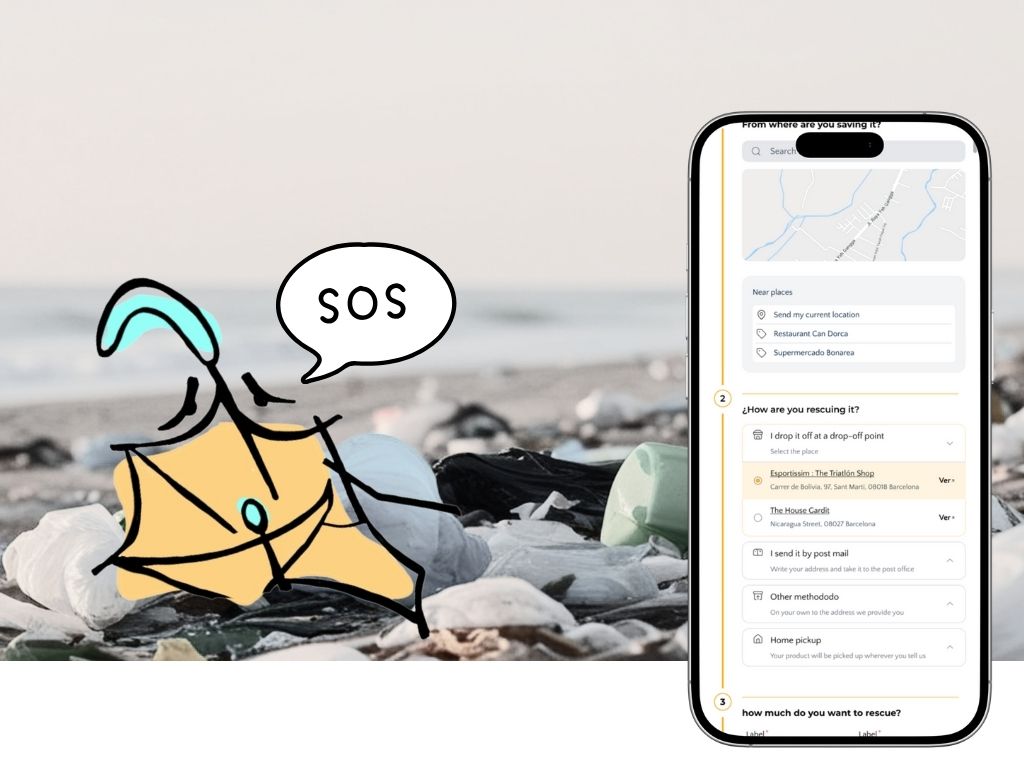
1. Field data capture with incentives
We capture traceability data even in low-connectivity or non-digital environments, linking every action to a real incentive for the person or organization returning or collecting materials.

Individual take back or pick up systems.
Linked to rewards: tokens, discounts or points.
Suitable for ports, beaches, local facilities or rural areas.
2. Real circular traceability (non-linear)
How can we trace materials collected in remote areas? Collections and returns can happen anywhere in the world
Capture events without internet connection
Securely syncs data once a network is available.
Ideal for low-connectivity settings: ports, rural areas, or analog sites.
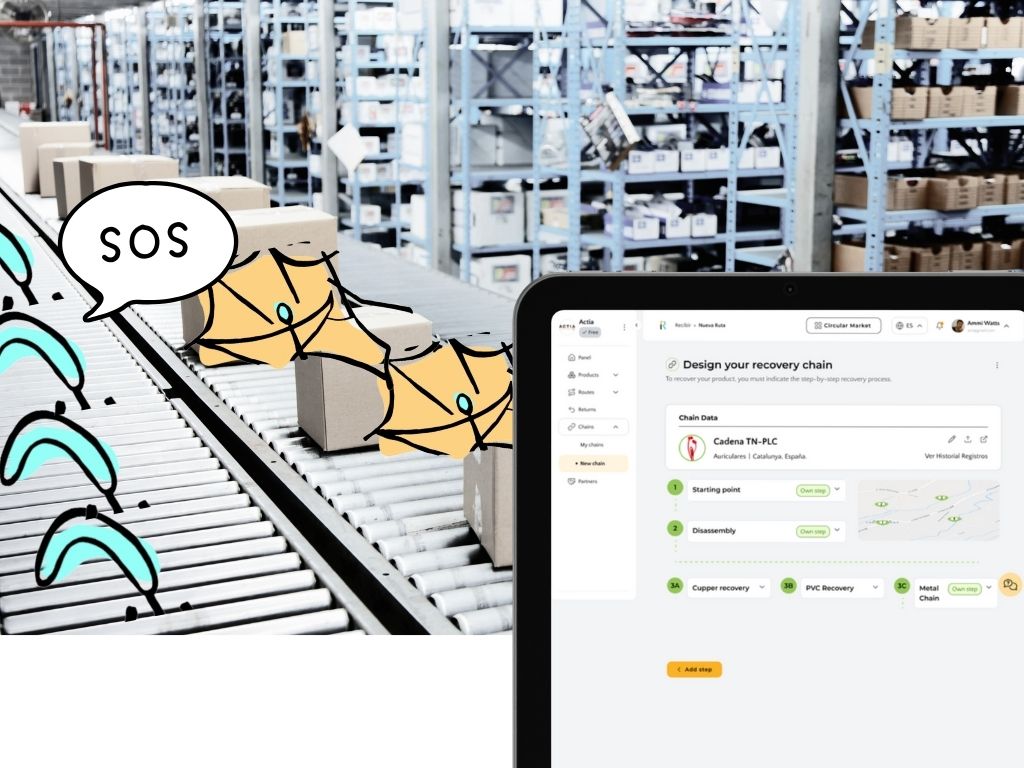
2. Real circular traceability (non-linear)
How can we trace materials collected in remote areas? Collections and returns can happen anywhere in the world
Capture events without internet connection
Securely syncs data once a network is available.
Ideal for low-connectivity settings: ports, rural areas, or analog sites.
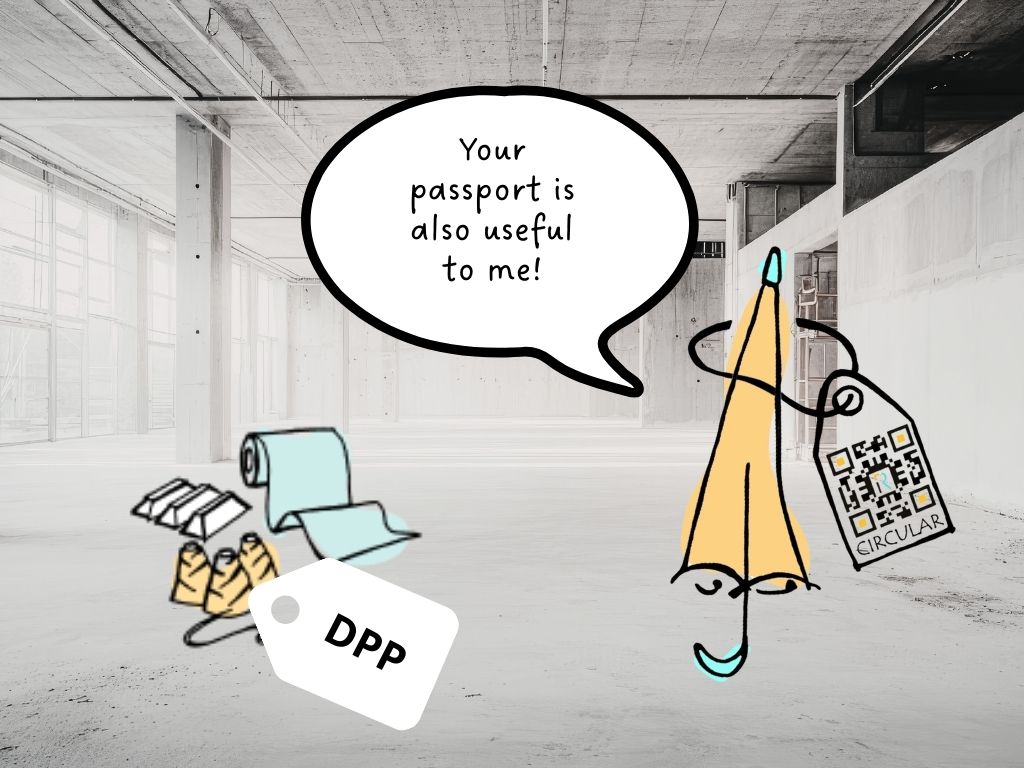
3. Modular and interoperable Digital Product Passport (DPP)
Our Revivack Circular Pass® connects all actors across the value chain (suppliers, collectors, recyclers, manufacturers) through an open and standardized data architecture.
Interoperable with external systems.
Granular data governance: each actor controls what they share.
Ready for EU regulatory frameworks (DPP, CSRD, EPR).
4. Auditable and third-party verifiable system
All generated data is designed to be audited by certification bodies, public authorities or independent validators.
Digital sealing and structural data consistency.
Blockchain used as an integrity layer, not as a buzzword.
Simple audits based on structured data and traceable evidence.

4. Auditable and third-party verifiable system
All generated data is designed to be audited by certification bodies, public authorities or independent validators.
Blockchain used as an integrity layer, not as a buzzword.
Digital sealing and structural data consistency.
Simple audits based on structured data and traceable evidence.
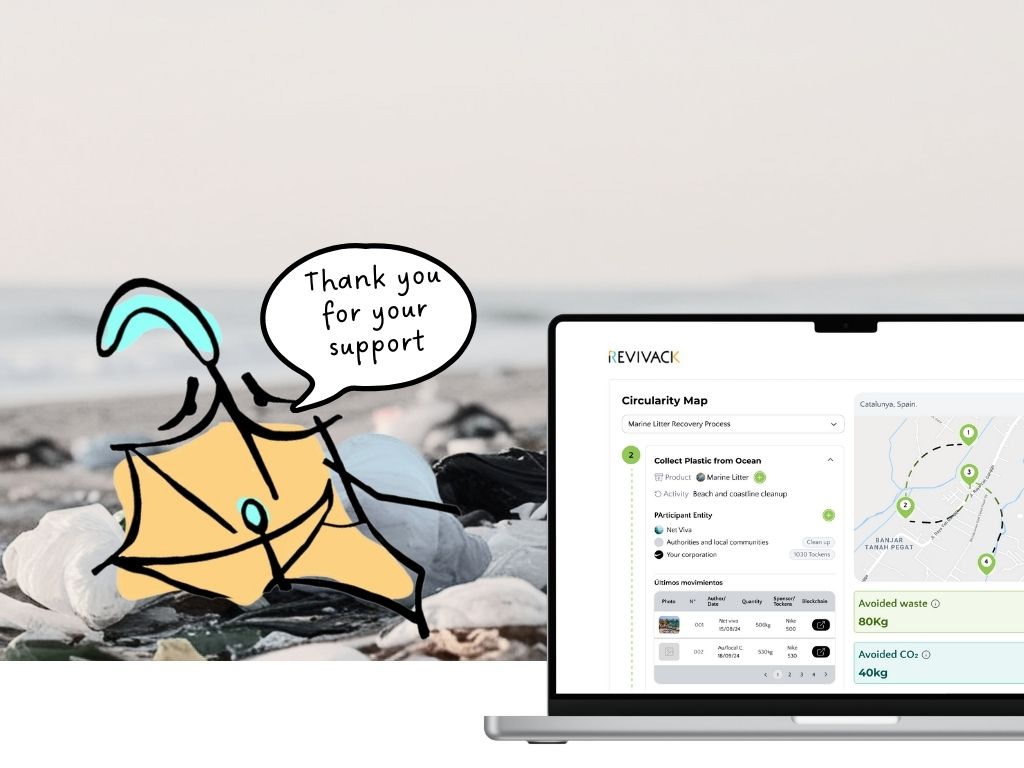
5. Verifiable circular credits (plastic credits / tokens)
Based on audited traceability and the Digital Product Passport, Revivack enables the generation of verifiable circular credits linked to real actions of collection, return, recycling or material valorisation.
Demonstrate verifiable EPR compliance through credits directly linked to audited recovery and recycling actions.
Support credible environmental impact claims with a transparent, third-party-verifiable data trail.
Activate circular value and recognition: organizations earn a personalized Reviver badge and a verifiable profile connected to the real materials and impact they support.
Revivack 3TR Standard
Real, Verifiable and Operational Circular Traceability
A technical framework to document, demonstrate and audit the circularity of materials, products and waste.
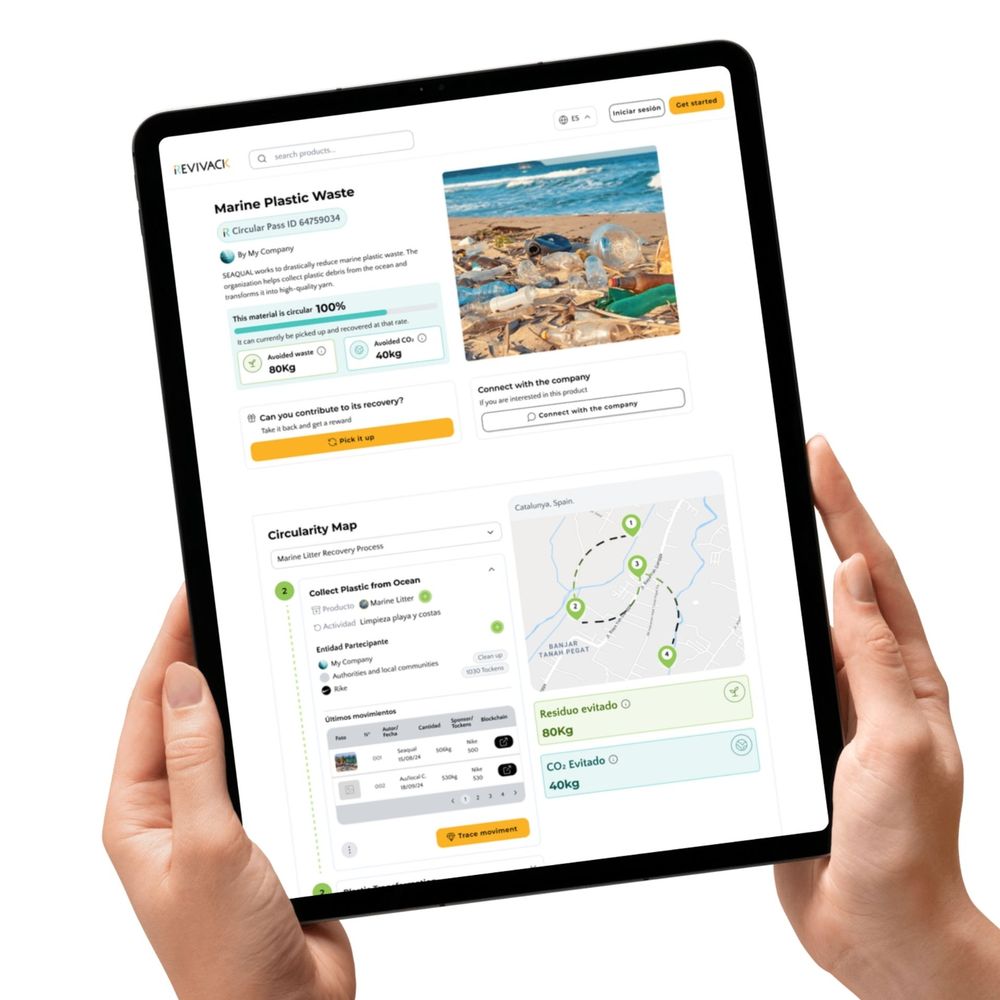
Revivack is the platform that makes circularity real
Easily plan, trace and certify the recovery of products, materials and events.
The guarantee for circular actions: Revivack Circular Pass®
Circularising is no longer optional. It’s a must.
The context has changed. Companies, governments and people demand more than words: they want action, traceability and real results.
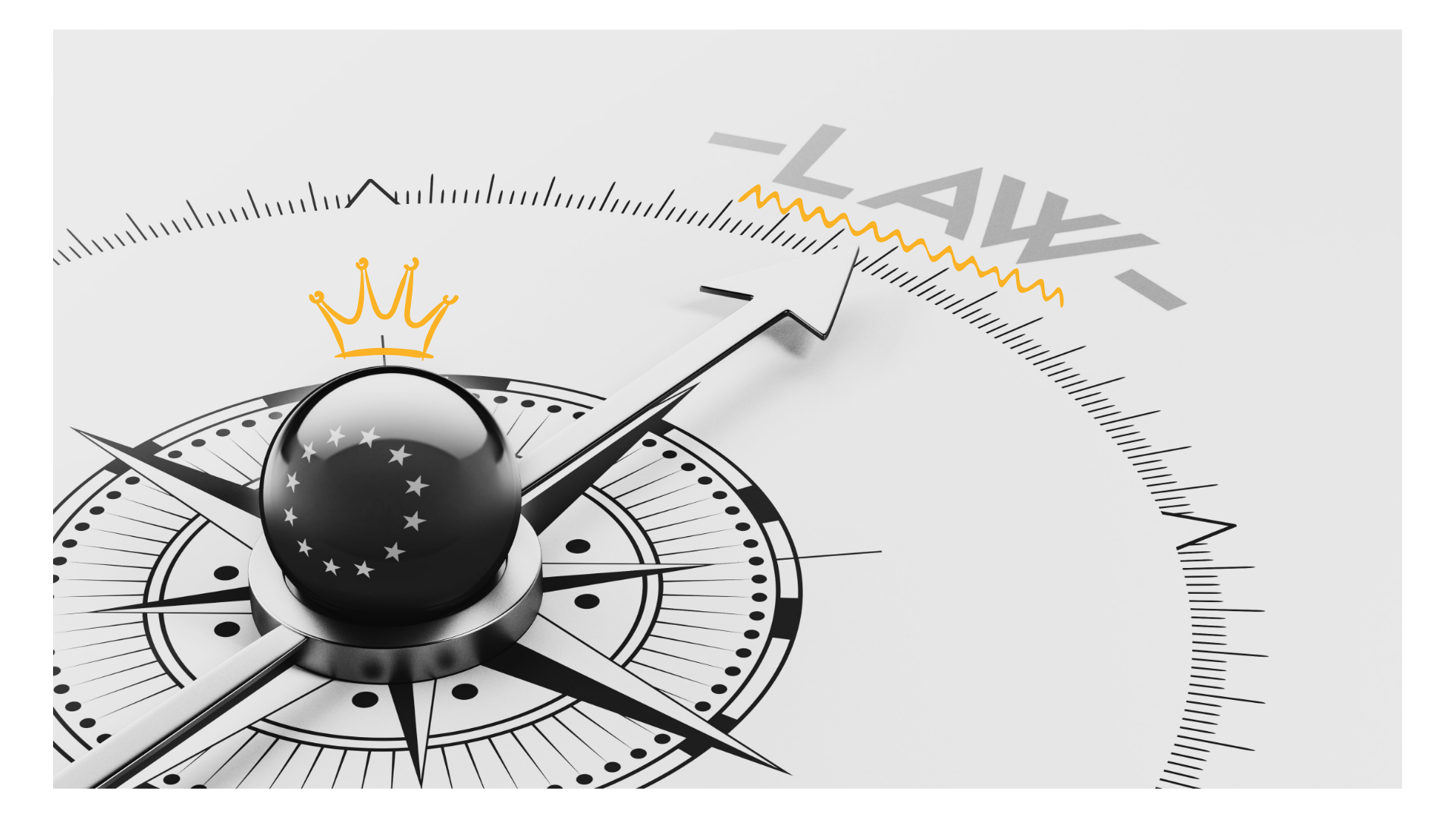
Regulations are tightening
Laws on extended producer responsibility (EPR), digital product passports and waste recovery are reshaping the rules of the game.
👉 : Starting in 2027, products without a digital passport may be banned from the European market.

The market demands transparency
Your market expects real traceability. Reputation is no longer built on design or efficiency, but on your ability to take responsibility for what happens after.
👉 : 67% of consumers penalise brands that greenwash.

The planet won’t wait for us
We can’t keep extracting without limits while what we use ends up buried. Every recovered item is a chance to avoid creating something new.
👉 : Only 9% of what we produce is actually recovered. The rest is lost forever.
Trusted by pioneering Revivers around the world






With Revivack, you don’t sell sustainability
you prove it.
From September 2026 onwards, in Europe, it will no longer be enough to appear circular: it will have to be proven.
Green Claims
Directive (EU) 2024/825
Extended Producer Responsibility
Waste Framework Directive 2008/98/EC, Article 8a
Ecodesign for Sustainable Products
Regulation (EU) 2024/1781❞ Green claims must be clear, credible and not misleading
The EU is tightening the rules on environmental marketing. Directive (EU) 2024/825 strengthens consumer protection against misleading green claims and unreliable sustainability labels, pushing companies to communicate sustainability with greater clarity and credibility.❞ EPR schemes must define roles, targets, reporting and financing
Article 8a sets the EU’s general minimum requirements for extended producer responsibility schemes. It requires clear roles for all actors involved, waste-management targets, data reporting, cost coverage, transparency, and monitoring and enforcement.❞ Products must be designed for durability, circularity and better data
The Ecodesign for Sustainable Products Regulation creates the EU framework for more sustainable products and supports better product information across the value chain, including through the Digital Product Passport.Supporters




Tech partners