
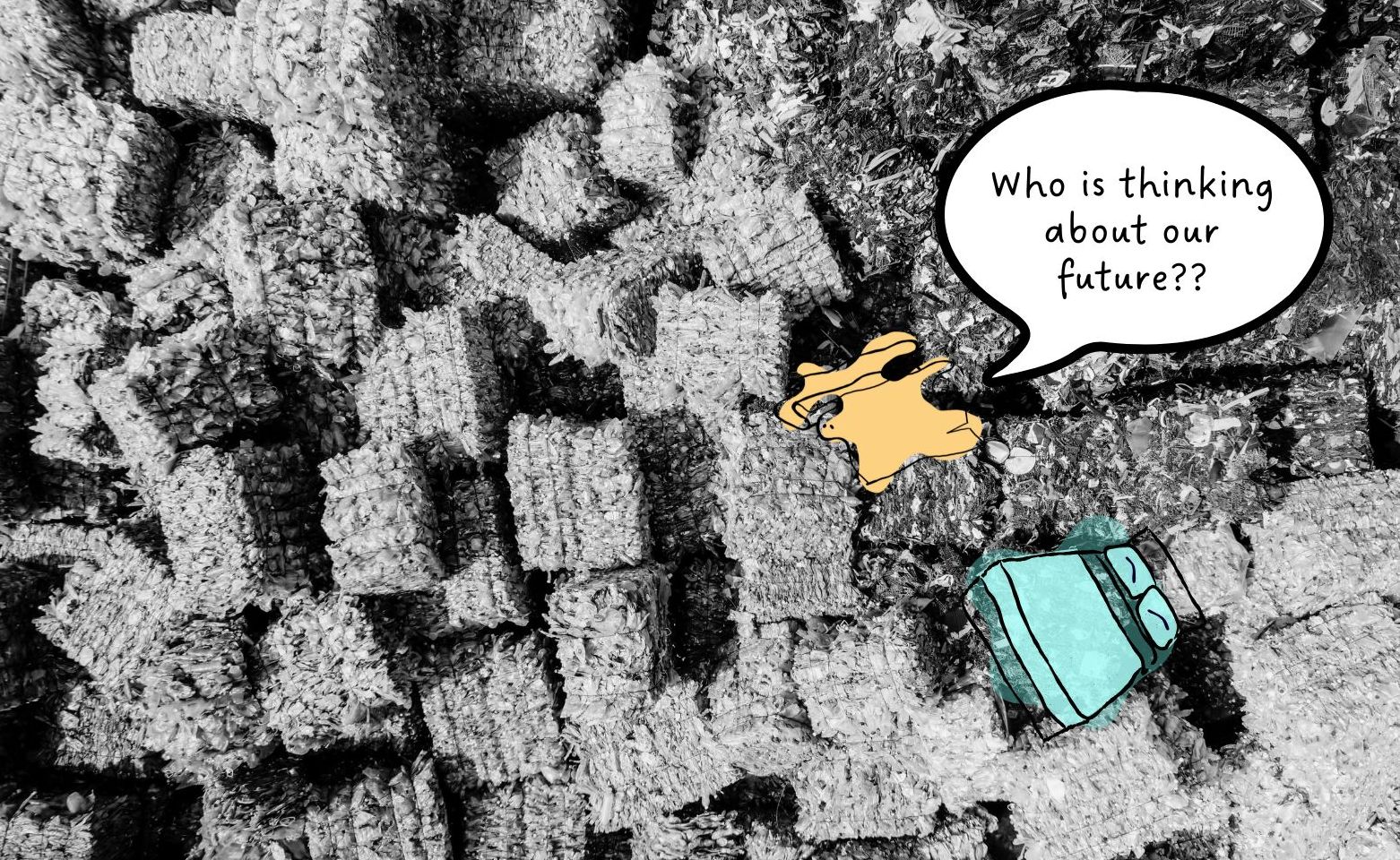
For too long, spaces have been perceived as neutral, passive backdrops where things happen. Hotels, venues, cultural centers, and corporate buildings have primarily been managed as logistical and functional structures. Yet they remain blind spots in the transition to a circular economy. Every day, products pass through them, and despite the efforts of many spaces to focus on sustainability, waste is still generated—without visibility or shared responsibility for what happens next.
That paradigm no longer holds. In the face of planetary limits and evolving regulations European Commission – Circular Economy Action Plan, spaces must be reimagined. They are no longer mere containers; they must become active circular agents.
What we already do, but don’t measure
Many spaces are already committed—consciously or not—to circular actions. Furniture is reused between events, suppliers are selected based on sustainability criteria, and certain waste streams are handled responsibly. But most of that work remains unrecognized, unstructured, and untracked.
The paradox is clear: even when doing things right, a space can appear linear. Without structure, documentation, or storytelling, circularity remains invisible. And that’s no minor issue. In a world increasingly allergic to greenwashing, what you cannot trace or prove, you cannot claim.
We’ve all seen it. Who hasn’t attended a buffet where the leftover food piles up and the team stares at it, unsure whether it can be reused? Or a trade show teardown where brand-new sofas and planters are discarded simply for lack of storage space? Or that beautifully crafted recycled signage that no one knows if they can use again? Circularity is closer than we think—we just need to make it visible.
The real circular challenge: following the products
Let’s be honest: it’s no longer about intentions. The real challenge is understanding what happens to the hundreds of materials and objects that pass through a space. Textiles, signage, AV equipment, temporary structures—each with a different lifecycle and recovery potential.
What happens to them after use? Who takes responsibility for giving them a second life? Who measures what gets recovered—or wasted?
Most often, the answer is no one. Not for lack of commitment, but because shared mechanisms don’t exist. There are no links between use and recovery. No collective accountability between producers, suppliers, installers, users, and waste handlers.
The mindset shift: from linear assets to circular nodes
The necessary shift isn’t technical—it’s cultural. We must stop seeing spaces as passive recipients of objects and start treating them as circular nodes: interconnected environments where decisions about products, processes, and people can close loops collaboratively.
It doesn’t require a full transformation. Circularity isn’t binary. It evolves product by product, supplier by supplier, gesture by gesture. What matters isn’t having it all figured out—but rather starting with what already works, and building from there.
That means recognizing the furniture already being reused. The supplier who already collects materials. The items that, if organized, could be recovered instead of discarded. That’s how real circularity starts: by making the everyday visible.
A path that starts with one step
Circularity is often misunderstood as something massive, expensive, or complex. But in truth, it’s about strategic simplicity. The first step is always to make visible what you already do well. Then, give it structure. Then, tell the story.
- Start with one product already being reused.
- Start with one supplier already recovering materials.
- Start with one item you can track and trace.
It doesn’t have to be perfect. But it does have to start. Because circularity isn’t a future goal; it’s a present choice.
Making the invisible visible: the R-Circular Pass®
At this stage, structure becomes essential. And that’s where the R-Circular Pass® plays its role. It’s not another label or badge. It’s a digital tool designed to help you organize, trace, and communicate your circular practices.
It links real products to real recovery. It provides transparent data, visible proof, and a growing framework that evolves with your space. You don’t need to transform everything overnight. You start with one product. Then another. The Pass grows with you.
And it turns your space into a living circular reference: verifiable, connected, constantly improving.
Ready to activate your space as a circular node?
At Revivack, we work with spaces like yours to map what’s already being done, identify the opportunities for traceable recovery, and connect your actions to a broader ecosystem.
Your space can lead by example—not through perfection, but through progress. It just takes one step.
→ Explore the Circular Spaces initiative at revivack.com/circular-spaces