
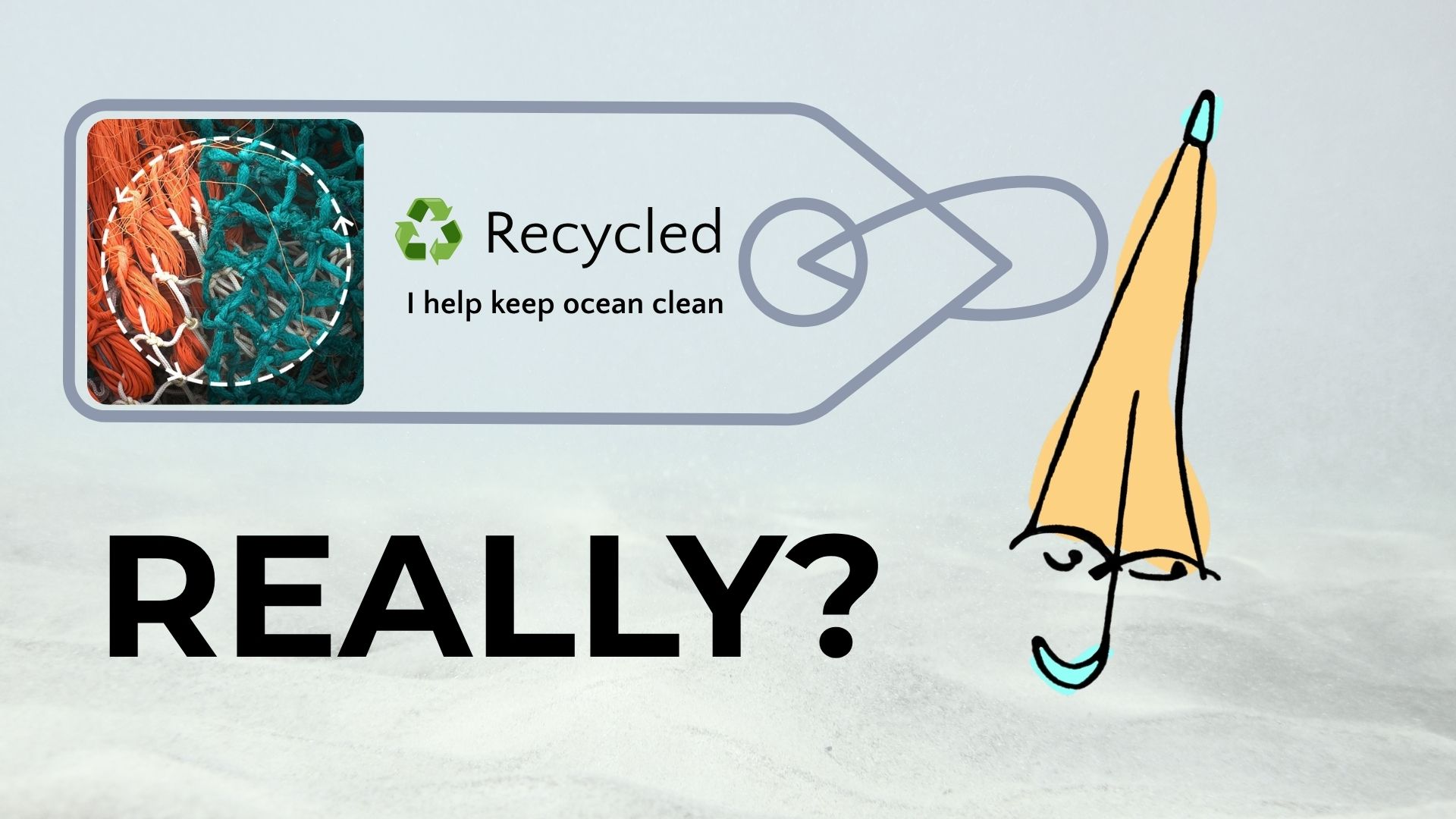
“This umbrella is made from recovered fishing nets.”
Sounds good. It’s circular. It’s sustainable. It has a fantastic story to tell. And, on top of that, it helps sell. But behind such an apparently simple statement, questions start to arise:
Where do those nets come from?
Who recovered them?
Who transformed them?
What percentage of recycled material does the umbrella actually contain?
Is there documentation to prove it?
Who holds that documentation?
And can we connect all that information to this specific umbrella?
Because saying something is one thing. Being able to prove it is quite another.
And from 27 September 2026, that difference becomes even more important.
Europe has been rolling out new rules on the circular economy, waste, ecodesign and environmental information for years. One of the regulations now coming fully into play is Directive (EU) 2024/825, which strengthens consumer protection against misleading commercial practices related, among other things, to environmental claims.

What You Can (and Cannot) Say Under the New European Anti-Greenwashing Rules
These rules tighten the conditions for using certain environmental claims in commercial communications aimed at consumers.
If you say it, you have to be able to prove it.
The basic idea is quite simple: it is not enough to say that something is sustainable, green, circular or has a particular environmental benefit; you must be able to substantiate what you claim and not exaggerate its scope. In other words: if you say it, you have to be able to prove it.
Let’s put Remy, our yellow umbrella, to the test. The company that manufactures it, UM Brand, publishes a series of claims on its website and information brochures. Let’s see which ones work, and under what circumstances.
☂️ “Remy is sustainable and environmentally friendly.”
Too generic. If you cannot substantiate what justifies that statement, it doesn’t work.
♻️ “Remy is made from recycled material.”
Careful. If only the fabric contains recycled material from recovered fishing nets, you cannot imply that the entire umbrella is recycled. Better: “Remy’s fabric contains X% recycled material from recovered fishing nets”, provided you can prove it.
🌊 “By buying Remy, you are helping to clean up the oceans.”
Only if you can demonstrate that this relationship really exists. Recovering fishing nets to manufacture a fabric does not, in itself, allow you to attribute any environmental benefit to the product.
🌍 “Remy is CO₂ neutral because we offset its emissions.”
No. The new rules prohibit presenting a product as neutral, reduced or positive in terms of emissions when that claim is based on external offsetting.
🏷️ “Remy Circular Certified” + our own green label.
You cannot simply create a sustainability label and use it as if it were an independent certification. Sustainability labels must meet the conditions established by the regulations.
🎯 “Remy will be 100% circular by 2030.”
A promise is not enough. Environmental claims about future performance require clear commitments, measurable targets, an implementation plan and independent verification.
In short: you can continue talking about sustainability. But the more specific your claim is, the more specific the evidence supporting it will need to be.
Which Companies Are Affected by the Anti-Greenwashing Rules?
We are surrounded by environmental claims. And the new European rules do not only affect product manufacturers: they also apply to companies that market services or use environmental claims about their own brand or activity when addressing consumers.
A sustainable hotel.
A green event.
A carbon-neutral experience.
A recycled product.
An eco restaurant.
A responsible brand.
Any company using these types of environmental claims may fall within the scope of Directive 2024/825.
This can therefore affect brands and manufacturers, retailers, ecommerce businesses, hotels, restaurants, tourism companies, event organisers and service companies, among many others.
The key is not so much what type of company you are, but what you are communicating to consumers about your environmental impact or performance.
If you use sustainability as a commercial argument, you need to know exactly what you are claiming and what evidence you have behind it.
What Evidence Does a Company Need to Substantiate Its Environmental Claims?
There is no single piece of “sustainability evidence”. Every claim needs data and proof to support it.
Let’s go back to Remy. If we claim that its fabric contains recycled material from fishing nets, we will need to demonstrate what the material is, what percentage it contains and where it comes from.
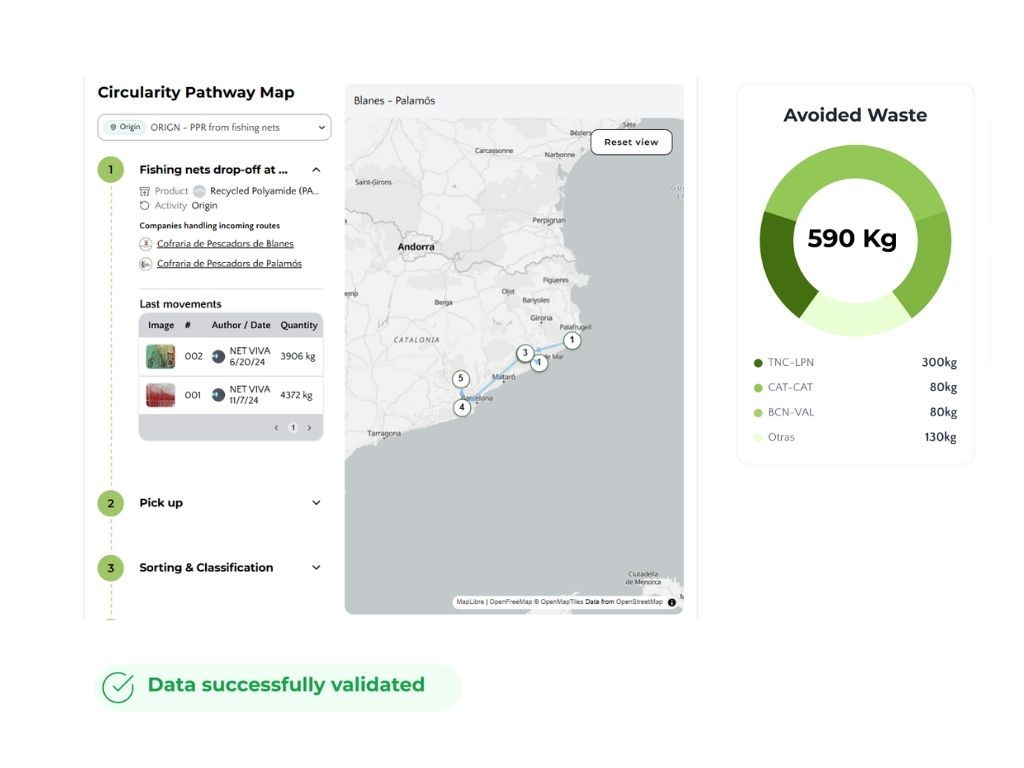
That information may be contained in certificates, supplier documentation or a Digital Product Passport connecting the product to that evidence.
If we communicate that we have offset certain emissions, we will need to demonstrate which emissions were calculated and what offsetting was carried out. That does not automatically make Remy “CO₂ neutral”: it proves exactly what we are entitled to claim.
If we use a sustainability label, we will need to demonstrate that it meets the conditions required by the regulations. And if we announce a future target — “we will be 100% circular” — we will need verifiable commitments, measurable objectives, a plan and the corresponding monitoring.
The logic is simple:
CLAIM → DATA → EVIDENCE
And this does not apply only to an umbrella. It applies to a product, a hotel, an event, a service or a company.
What changes is the claim and, therefore, the evidence required to support it.
What Happens When the Evidence Is in the Hands of Your Suppliers?
What if the evidence is not actually inside your company?
You may know perfectly well what you want to prove and still not hold the evidence needed to do so. But this can be solved by connecting with the people and organisations that do.
Let’s go back to Remy.
The brand sells the umbrella, but the organisation that can prove the origin of the fishing nets may be a fishermen’s association or a recovery operator; the recycler may certify their transformation; the manufacturer knows the composition of the fabric; and the waste manager can provide evidence that the umbrella can be recovered at the end of its life.
The evidence is distributed throughout the value chain.
And this creates a new challenge: interoperability.
It is not enough for each company to have its own certificates, delivery notes or data. To substantiate an environmental claim, that information needs to be able to flow between companies and connect with the product, material, service or activity it refers to.
SUPPLIER → MANUFACTURER → BRAND → CUSTOMER → WASTE MANAGER → RECYCLER → MANUFACTURER → BRAND → CUSTOMER → … and so on, potentially indefinitely.
Each actor generates part of the information. The value lies in connecting it and turning it into traceable and accessible evidence.
And this is no longer just about Remy.
A hotel needs information from its suppliers. An event needs information from stand builders, caterers or waste managers. A brand needs information from manufacturers and recyclers.
Circularity does not happen within one company. It happens between companies. And evidence needs to be able to do the same.
Fewer green claims. More evidence.
And circularity that can be proven.
How Can You Prepare Your Company for the New Anti-Greenwashing Rules?
The answer is not to stop talking about sustainability. It is to know exactly what you can prove.
Start by identifying your environmental claims, determining what data each one requires and locating the evidence. Some of it will be inside your company. Some, as we have seen, will be held by suppliers, manufacturers, waste managers or recyclers.
The real challenge is making sure all that information stops being fragmented and can be connected.
And this is where Revivack comes in.
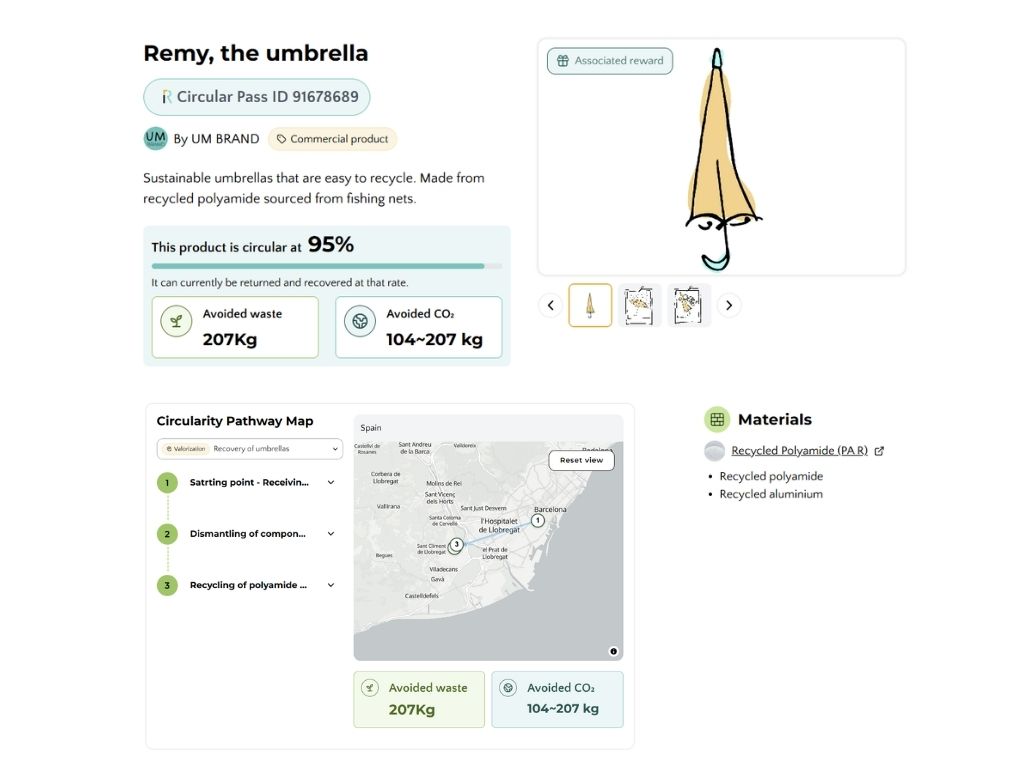
We are building a layer of Circular Intelligence capable of:
ANALYSE · SEARCH · CONNECT · MANAGE · EVIDENCE
We connect products, materials, companies, processes and evidence to transform fragmented information into structured, traceable and accessible circular data.
Because having a certificate is important.
Being able to connect it to what you want to prove is what gives it value.
And back to Remy one last time.
When someone reads that its fabric contains recycled material from recovered fishing nets, behind that sentence there should be a chain of information capable of proving it.
That is what we want to make visible.
Fewer green claims. More evidence.
And circularity that can be proven.