

Sustainability sells. It sounds great to say that your product cares for the planet, respects natural cycles, saves resources and reduces CO₂. Brands know it, they promote it, they put it front and center. Because green is in demand.
The problem is that, many times, what is said is only a fraction of what is actually done. Not out of bad faith, but because it is difficult to know where the line lies between communicating with enthusiasm and communicating with rigor. And that is where the risk of greenwashing begins: the tendency to dress up the same old practices with clean words. To promise through labels what cannot yet be proven with data.
Since February 2024, a European directive prohibits claiming that a product is “sustainable” if you cannot demonstrate it with verifiable, accessible and concrete evidence. If you sell products or services in Europe and at some point you have wanted to say —or you already say— that your brand is “green” because you are improving your processes, this post is for you. I explain what the law allows, what it does not, and how to prevent a well-intentioned claim from becoming a legal problem.
Environmental claims under the Green Claims regulation
An environmental claim is any message that states, suggests, or implies that a product, a service, or a company has a positive, or less negative, impact on the environment. The European Green Claims framework makes it clear that these claims, although common in the market, cannot be made without verifiable and accessible evidence. Good intentions or aspirational language are not sufficient.
Typical examples include: “100% recycled”, “environmentally friendly”, “natural”, “lower emissions”, or “eco-designed”. All of these are environmental claims. And yes, many of them can be proven. But to do so legally, companies must have clear, measurable evidence available either to consumers, to competent authorities, or for independent audit.

What the 2024/825 Regulation prohibits
European Directive 2024/825 establishes clear restrictions on how brands may communicate the sustainability of their products. Its objective is to prevent consumers from being misled by imprecise or unverifiable claims. These are the main prohibited practices:
1. Generic claims without substantiation
Terms such as “eco”, “green”, “sustainable” or “natural” may not be used unless they are clearly defined and supported by verifiable evidence. The regulation considers that these words, on their own, can be misleading if it is not specified what the alleged environmental benefit actually consists of.
2. Claims without public access to justification
Any environmental claim must be documented and made publicly available. It is not enough to have the information “internally”: consumers must be able to access the technical justification supporting the claim. Otherwise, it is considered an unfair commercial practice.
3. Unrecognized labels or logos
It is not permitted to use seals, logos or visual elements that suggest an environmental certification if it is not granted by a recognized body or if there is no official system behind it. Creating a green logo or using ambiguous symbols is considered a form of greenwashing.
4. Misleading comparisons
Comparisons such as “better for the planet” or “more eco-friendly than…” are also prohibited if they are not based on objective, measurable data collected through a transparent methodology. Comparing products without a verifiable scientific basis is illegal.
Real examples of claims that have raised greenwashing concerns

CASE 1. Adidas launches sneakers made from ocean waste and illegal fishing nets
An Adidas campaign promoted sneakers (as part of the Stan Smith line) with the claim that they were “50% recycled” and associated them with the “End Plastic Waste” logo. According to the French advertising watchdog, this claim was misleading because it was not clear whether the recycled content referred to the entire shoe or only to certain components, nor whether the materials were recyclable at the end of their useful life.
This case shows that even leading brands can fall into greenwashing when environmental messages are not clearly supported by verifiable data on the real scope of impact and actual recyclability.
In addition, in 2025 a German court ruled that a corporate claim by Adidas about achieving climate neutrality by 2050 was insufficient from an evidentiary standpoint, as the company failed to explain—with verifiable evidence—how it planned to reach that objective.

CASE 2 – H&M: Environmental claims and disputed scoring systems
In 2022, H&M was accused of greenwashing due to the use of environmental labels and scoring systems based on data that did not accurately reflect the real impact of its products. In some cases, the scores claimed reductions in environmental impact that did not match the actual life-cycle assessment calculations.
The generic use of terms such as “sustainable” or “Conscious” without detailed supporting evidence can be subject to legal scrutiny or consumer complaints.
Subsequent investigations into the Conscious collection pointed out that H&M did not clearly explain why those products were more sustainable, which led to the removal of certain explanatory pages due to lack of clarity. At a judicial level, a class-action lawsuit was filed against H&M in the United States in 2022 for misleading advertising related to its “sustainable” / “Conscious” line, although some cases were dismissed in 2023 on jurisdictional grounds.
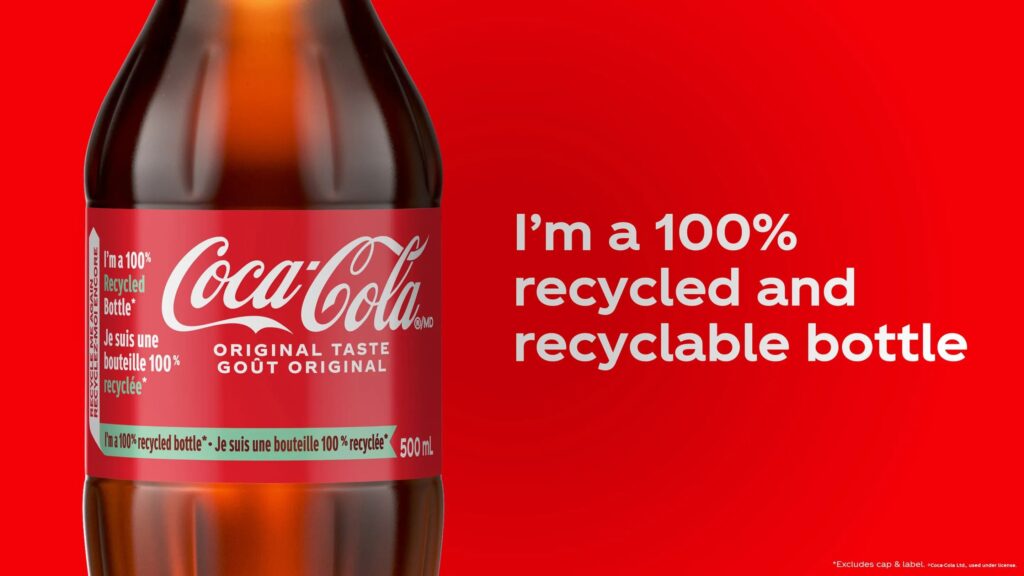
CASE 3. – Coca cola: Labelling too generic
A paradigmatic case in Europe is that of Coca-Cola and its claims regarding the sustainability of plastic packaging. In November 2023, consumer organizations such as BEUC, supported by ClientEarth, filed a formal complaint with the European Commission over the use of messages such as “100% recycled” or “100% recyclable” on plastic bottles. The issue was not only the claim itself, but the fact that it did not explain its real limitations.
In many cases it did not include caps and labels and conveyed the idea of an almost neutral environmental impact that could not be demonstrated in practice.
As a result of this regulatory pressure, in 2025 Coca-Cola committed to modifying its labels in the EU, removing messages that suggested full circularity, such as “Recycle me again”, and replacing them with more precise wording, for example clarifying that “100% recycled” refers only to the bottle body. There was no financial penalty, but a clear precedent was set: if a claim can mislead consumers about the real environmental impact of a product, it must be corrected or withdrawn to comply with the principles reinforced by the European Green Claims framework.
Proving what you claim: traceability as key evidence
Most environmental claims are not impossible to prove. The issue is that, when they are not properly formulated or documented, they become a legal risk. One of the most sensitive areas is anything related to the origin of materials: where they come from, what percentage has been recovered, and what journey they have taken before becoming part of the final product.
When a brand says that a sneaker is made from fishing nets recovered from the ocean, it is not enough for that to be “partly true”. It must be true in its entirety, demonstrable, and traceable back to the source. What is being questioned is not the intention to do things right, but the ability to justify them with data.
Today, you can prove it, and it’s not that complicated
The good news is that doing things properly is no longer difficult. Today, there are digital traceability tools that make it possible to demonstrate the exact origin of the materials used in a product, supported by photographic evidence, geolocation, document validation, and even blockchain records when necessary.
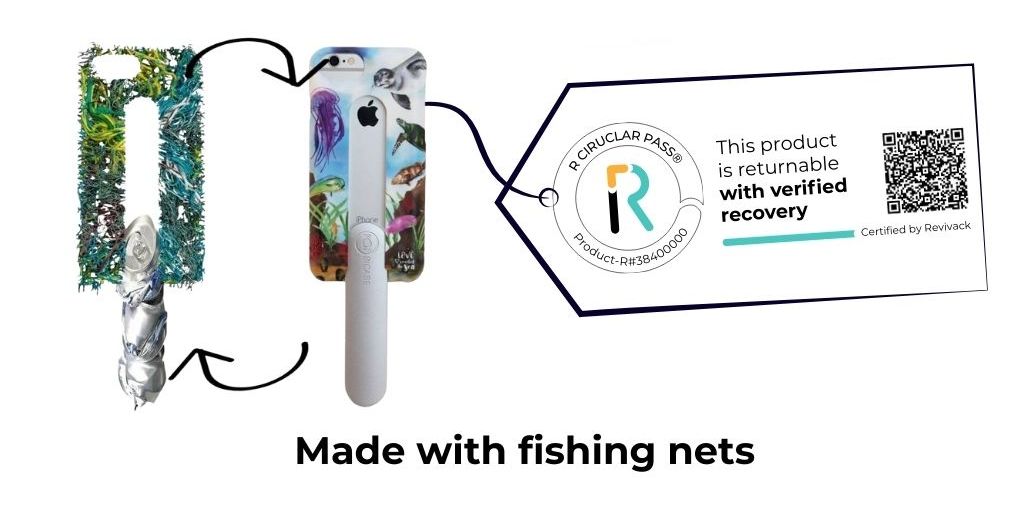
And, as a clear real-world example of what this means in practice: POPSICASE is a phone case made from fishing nets that does not just claim it — it proves it through a certified record of the material’s origin used in the product:
https://app.revivack.com/es/products/49892518-poliamida-6-reciclada-pa-6-r
In short: if you are doing things right, proving it is extremely easy. And it is something that not only protects you legally, but truly sets you apart.