
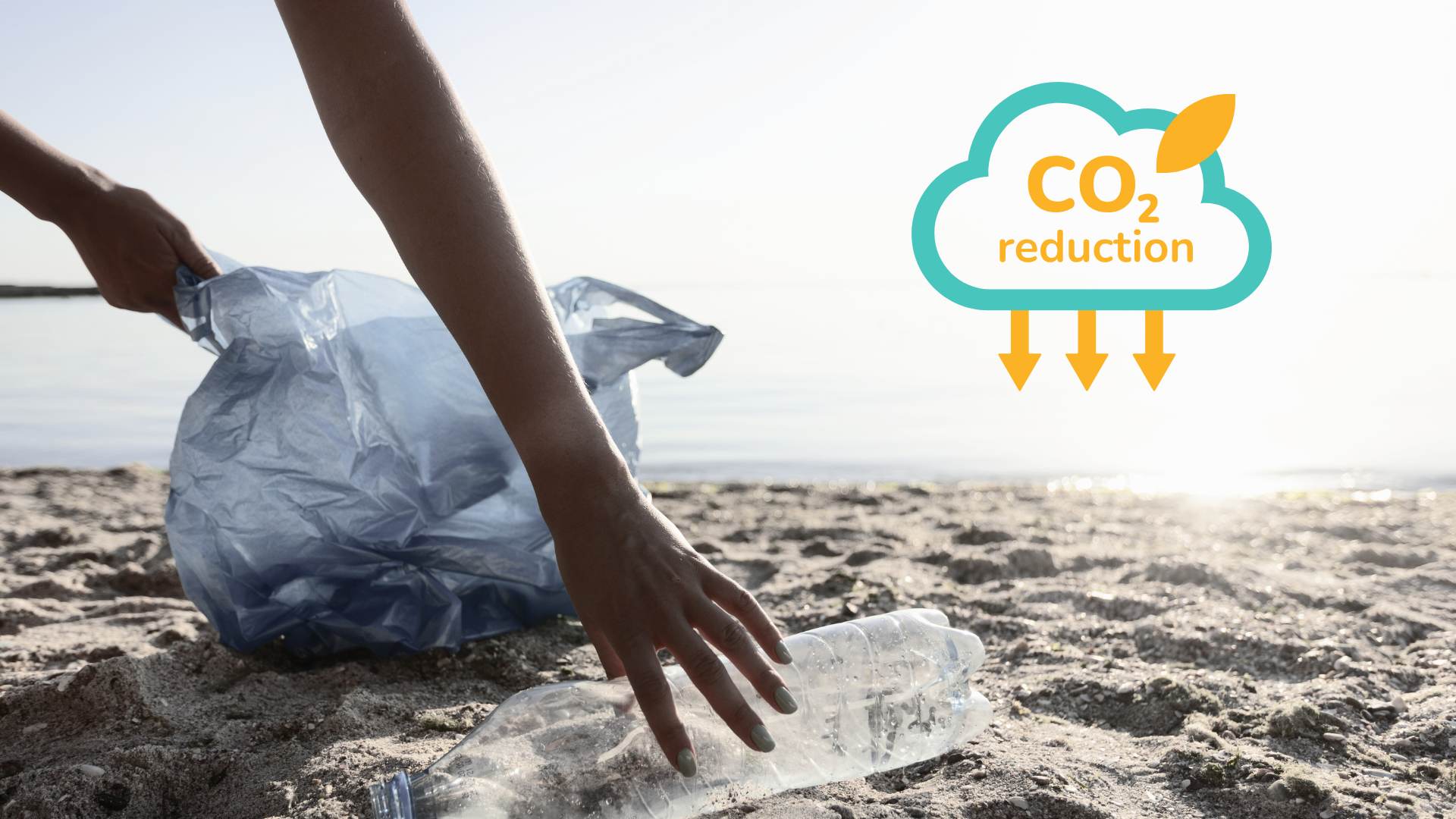
“The world is on track for a catastrophic temperature rise.”
You’ve probably seen headlines like this before. They’re engineered to shock, and they do. But they rarely inform, and they almost never inspire action. In fact, climate communication research is clear: the more doom we’re fed, the less capable we feel. Instead of motivating people, these headlines often create paralysis, the exact opposite of what this decisive decade demands.
Shocking climate headlines have become so routine that they blur into background noise. Instead of driving action, they leave many people feeling like it’s already too late to make a difference. But that narrative is false. There are practical, immediate actions that cut emissions right now, without waiting for new laws or grand political deals. One of the most overlooked and most powerful is preventing waste. This article explores how waste prevention delivers real, measurable climate impact, and how tools like Revivack make that impact visible, traceable and credible.
But before we jump to the solutions, we need to face the facts. According to the UN, current national climate plans still put us on a 2.5–2.6 °C trajectory, far beyond the Paris Agreement’s limits.
And with COP30 now underway in Belém, Brazil, the world is watching closely.
This summit isn’t ceremonial, it’s a moment of global accountability:
- The first Global Stocktake has exposed just how far we are from where we need to be.
- Nearly 100 countries, covering two-thirds of global emissions, are preparing stronger Nationally Determined Contributions (NDCs).
- Pressure is intensifying for real implementation, not just climate promises.
What the Paris Agreement Actually Requires
Back in 2015 at COP21, countries committed to:
- Limit global warming to “well below 2 °C”, and to strive for 1.5 °C.
- Submit increasingly ambitious NDCs on a regular cycle.
This wasn’t just a political promise. It created the first legally binding framework tying national policies to measurable climate outcomes.
But Paris was always meant to be a starting point. The test of success lies in how these commitments are carried out and this is where COP30 shifts the conversation dramatically. COP30 is the first major climate summit taking place after the Global Stocktake, an assessment of collective progress. And its conclusion is stark: ambition exists, but implementation is falling behind. COP30 demands that countries demonstrate how they will deliver on their climate goals, not just what they intend to achieve.
This is a shift from promises: to plans – to execution.
And execution requires something global frameworks cannot supply alone:
operational systems that track what happens to materials, products and emissions in the real world.
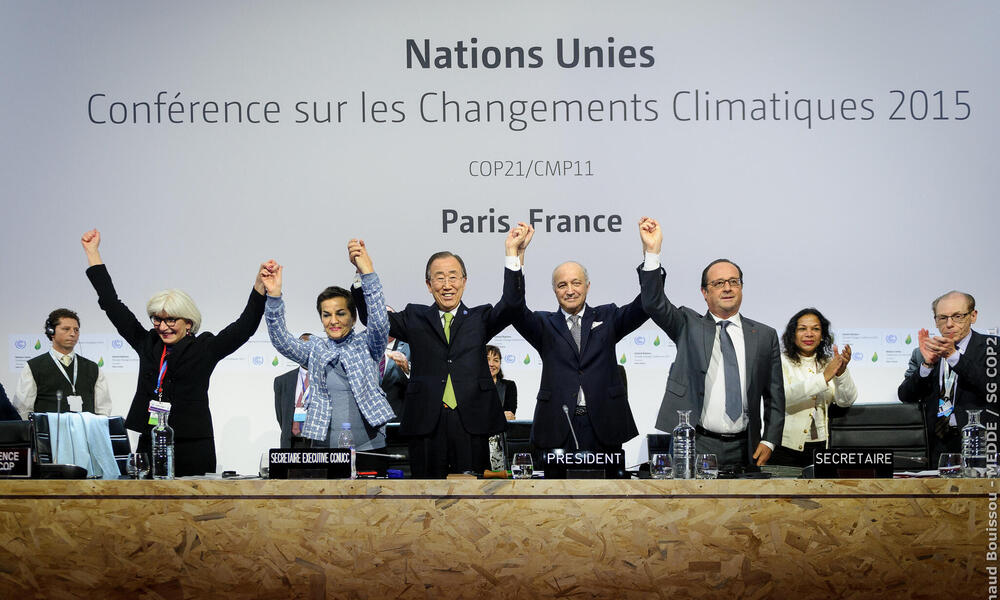
Celebration of the adoption of the Paris Agreement on 12 December 2015 during the UN Climate Change Conference (COP21) in Paris.
A moment when hopes were high and a reminder of how far ambition must rise again as COP30 exposes our collective shortfalls and the urgent need to turn promises into action.
Where Theory meets Reality: The Net-Zero 2050 Scenario
To make the 1.5 °C goal operational, the International Energy Agency (IEA) developed the Net Zero Emissions (NZE) by 2050 scenario. This isn’t about eliminating all emissions, it’s about balancing what we emit with what we remove from the atmosphere, through:
- Better product design and circular economy practices
- Material recovery and recycling
- Carbon sinks, such as reforestation
- Clean energy systems
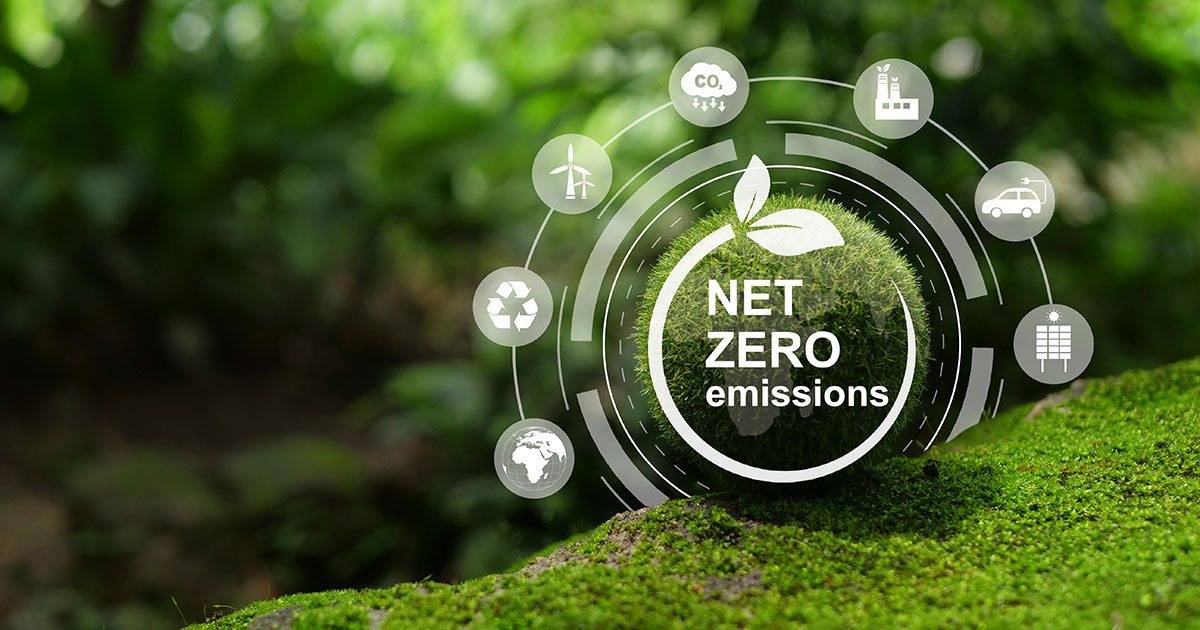
Net zero refers to a state of balance in which the amount of greenhouse gases (GHG) emitted into the atmosphere is equal to the amount that is removed
That balance is exactly what COP30 needs to catalyse, but it will only happen if countries, companies and communities align their ambition with implementation.
Climate agreements are not enough: We need systems that deliver
If the NZE vision still feels abstract or too far removed from your everyday business, you’re not alone. But here’s the critical insight: Net-zero is deeply interconnected with the circular economy. These aren’t separate pathways, they are two sides of the same coin.
A circular economy (CE) challenges the traditional “extract → produce → consume → discard” model. Instead, it extends the life cycle of materials, prioritises reuse and recovery, and dramatically lowers waste and pollution.
This matters for both citizens and companies because the decisions we make about the materials we buy, use and discard directly shape our climate impact and the circular systems we build today determine the economic resilience, cost savings and environmental stability we experience tomorrow.
Proven solutions that bridge the gap between Policy and Practice
Headlines alone won’t bring us to 1.5 °C. Implementation will. That means transforming big climate goals into real, trackable action:
1. Waste prevention and reuse: Reducing waste avoids emissions immediately by lowering demand for new materials.
2. Verified recovery and recycling. When products remain traceable after use, materials are recovered more efficiently and emissions drop.
3. Circular procurement and design: Companies can influence entire supply chains by demanding products built for reuse, repair and recovery.
4. Transparent, data-driven reporting: Climate claims become credible only when backed by verifiable evidence a requirement the EU is now enforcing.
These solutions are proven, scalable and already deployed in forward-thinking industries.
What’s missing is the infrastructure that links intention to measurable impact.
Circularity is not optional: It’s the only path to Net Zero
To truly decarbonise, we must redesign how economies work. Waste isn’t just a nuisance, it’s a massive climate liability. Poor waste handling and low rates of material recovery block both the NZE scenario and the transition toward a circular economy.
Consider Municipal Solid Waste (MSW): packaging, food scraps, old furniture. All of these materials, when mismanaged, become a hidden source of greenhouse gas emissions. Most discarded products lose traceability, become mixed waste, and are eventually landfilled, incinerated, or exported without effective oversight. That broken link between design and disposal drives avoidable emissions.
A 2022 study by CE Delft and Prognos, commissioned by European waste associations, quantified the opportunity: by improving waste prevention, sorting and recovery across ten major waste streams, the EU could avoid 137–283 million tonnes of CO₂ equivalent by 2035. On a per-ton basis, that means 0.1–0.5 tonnes of CO₂e avoided for each ton of properly recovered or prevented waste.
But these savings will remain on paper without systems to plan, verify and track what actually happens to products after their first life. That’s the “missing middle” and that’s exactly where Revivack comes in.
How Revivack Makes Circularity Real And Climate Claims Credible
Revivack offers a practical and trustworthy platform to close the loop:
- Businesses map recovery routes before launch.
- Each product can be assigned a Circular Pass®, with verifiable end-of-life data.
- Material flows are traced to trusted recovery partners.
This operational layer transforms waste from a liability into a measured climate asset. It lets businesses prove with data that they’re not just designing responsibly, but ensuring circular outcomes.
In doing so, Revivack bridges the gap between theory and practice, helping make NZE and circular economy goals not aspirational, but achievable.
What You Can Do Today, Even During COP30
For business leaders, employees and consumers overwhelmed by climate doom, here’s a more hopeful question: “What concrete next step can I take right now?”
One of the most powerful and immediate steps to take is starting with the waste we generate and demanding that our products are part of a traceable lifecycle.
Revivack offers that bridge. By helping organisations design recovery plans, trace end-of-life flows, and validate real impact, it empowers you to transform circularity from ambition into action.
If climate goals are going to shift from theory to reality, everyone must play a part, not just policymakers.
Become a Reviver — because meaningful change begins with what we choose to recover next.
References
UNEP Emissions Gap Report 2023–2024
https://www.unep.org/resources/emissions-gap-report
UNFCCC – Nationally Determined Contributions (NDCs)
https://unfccc.int/process-and-meetings/the-paris-agreement/nationally-determined-contributions-ndcs
UNFCCC – The Global Stocktake
https://unfccc.int/topics/global-stocktake
Paris Agreement (2015)
https://unfccc.int/process-and-meetings/the-paris-agreement/the-paris-agreement
IEA Net Zero by 2050 Scenario
https://www.iea.org/reports/net-zero-by-2050
CE Delft & Prognos (2022): Climate Benefits of EU Waste Management Scenarios
https://cedelft.eu/publications
European Environment Agency – Circular Economy and Waste Prevention
https://www.eea.europa.eu/themes/waste/resource-efficiency
European Commission – Green Claims and Substantiation Requirements
https://environment.ec.europa.eu/topics/circular-economy/green-claims_en