
Every year, the climate headlines get louder and more paralyzing. 2023 was the hottest year ever recorded. July, the warmest month in human history. Emissions keep rising. Promises keep failing. At some point, numbers stop shocking us. The noise becomes normal. We scroll, we shake our heads, and we move on. But what if we didn’t? What if we focused on what we can actually change, here and now?
This post is not about guilt or catastrophe. It’s about agency. And one of the most immediate, measurable ways to act: preventing waste.
From global goals to daily action: why waste matters
The COP30 talks are underway. As world leaders debate how to turn ambition into policy, one thing is clear: Without circularity, there is no climate solution. Net Zero will not be achieved by energy transition alone. We need to rethink how we design, produce, consume, and dispose of everything.
“If we want to talk about climate ambition, we need to talk about waste.”
The IPCC, UNEP, and European institutions all agree: we must radically reduce resource use and waste generation. Yet most action focuses on dealing with damage after it’s done, not preventing it in the first place. Circularity offers a way to rethink the system from the ground up, and shift from control to prevention.
But circularity isn’t just about better recycling. It’s about a mindset shift. From “less harm” to different logic. From reacting to problems to preventing them before they start. And yes, it matters. Because every kilo of waste we avoid, matters twice. It prevents pollution and reduces emissions.
That balance is exactly what COP30 needs to catalyse, but it will only happen if countries, companies and communities align their ambition with implementation.
Waste is climate. Period.
It’s time to connect the dots. Waste is not a side issue. It’s a climate issue. Methane from landfills is the third-largest source of global warming gas. And the emissions tied to waste are not just from disposal. They come from extraction, manufacturing, shipping, packaging, incineration…
Yet we treat waste as an afterthought. The backend of a broken system. We know better. In fact, the European Commission estimates that better waste management could prevent 283 million tonnes of CO₂e by 2035. And multiple studies, including our own, confirm this:
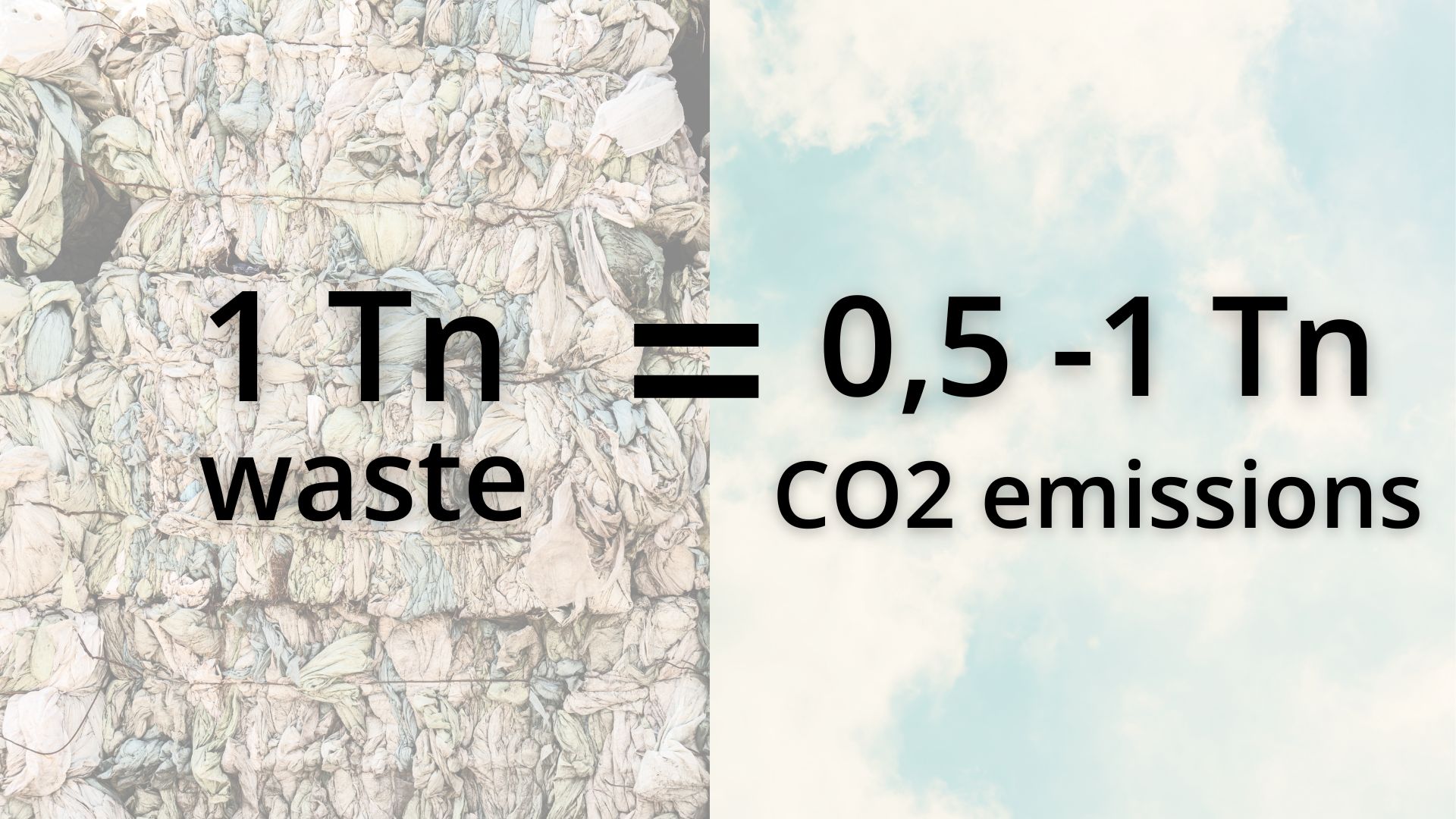
Each tonne of waste prevented avoids between 0.5 and 1.0 tonnes of CO₂e, depending on the material type and the treatment avoided.
🔗 See Revivack’s full technical note on avoided emissions
🔗 Reference: CE Delft & Prognos – Greenhouse Gas Emission Reduction Potential
That balance is exactly what COP30 needs to catalyse, but it will only happen if countries, companies and communities align their ambition with implementation. What we prevent from being thrown away has just as much value as what we recover.
So how do we measure it?
This is where Revivack comes in. We’ve created a tool to track circular flows before waste even exists. Every product can be registered and linked to a Circular Pass®, documenting return routes, partners, and end-of-life outcomes. This allows companies to:
✅ Design recovery plans before launch
✅ Trace returned products in real time
✅ Measure emissions avoided by preventing waste
✅ Communicate circular value in verified terms
No more abstract goals. Just real flows, real data, real reductions.
“Circularity is not a ‘nice to have’. It’s the backbone of any viable Net Zero strategy.”
If you want action, start before waste exists
Circularity is not a checkbox. It’s a strategy. And it’s not “nice to have”. It’s how we get to Net Zero without illusions. At COP30, the rhetoric will be intense. So will the urgency. But if we wait for consensus, we’ll lose time we don’t have. Change doesn’t have to start in a treaty. It can start in your product sheet.
👉 If you want to stop emitting, start by preventing.
👉 If you want to prevent, start by tracing.
👉 And if you want to trace it all — come to Revivack.
We’ll help you design circularity, prove your impact, and turn climate intention into circular action. Because what you prevent matters.